


The Application of Stellite Series Alloys in Galvanized Lines
With the rapid development of the automotive and home appliance industry, the demand of hot-dip galvanized sheet is growing. Therefore, the major domestic steel mills have been increasing the capacity or updating the current production line. Among them, the sink roller and stabilizing roller bearing system, are one of the core components in entire hot-dip galvanizing lines. The operational status and life time of the sheets plays a decisive role in the quality, and they become one of the focuses that manufacturers concern about.
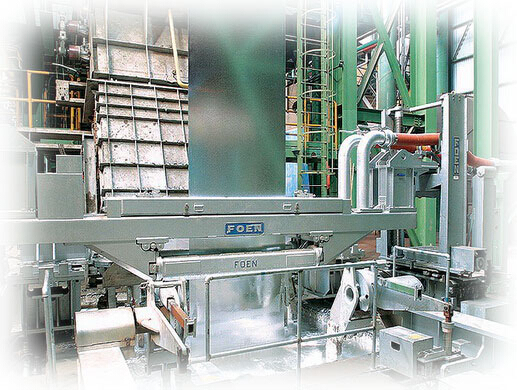
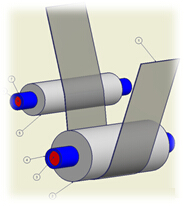
Working environment
The working temperature of bearing system in the molten zinc solution environment is generally between 450 - 480 ℃. In some special production line, the operating temperature can even reach at 600 ℃. At the same time, zinc liquid has corrosive effect on the working parts. Besides, slags and hard intermetallic compound particles will be produced during production, which exacerbate the wear of working parts. Therefore, the material of the sleeve system must have excellent resistance to high temperature, zinc corrosion and abrasion in order to ensure the stable operation of the whole system. In this condition, Stellite series alloy materials become an inevitable choice.
Material selection
Wisdom’s Stellite equivalent alloys have many success cases in the sink roller and stabilizing roller bearing system in hot-dip galvanized production line. Stellite and Tribaloy alloys have excellent resistance to high temperature oxidation and corrosion in zinc-aluminum solutions. Besides, they retain the abrasion resistance in high-temperature and metal-to-metal wear resistance, and therefore they have been widely used. We usually use WD-Co 1, WD-Co 6, WD-Co 12, WD-Co 400 and other alloys as well as specific ceramics as the bearing materials to form smooth friction pairs to meet the demand of stable operation of the equipment.
Manufacturing process
The situations of steel mills are very different from each other in actual production processes. Manufacturers always differentiate alloy selections and structural designs, while the focuses are also different in terms of life time, cost, sheet quality, stability. The various differences ultimately lead to the diverse manufacturing process lines. At present, the processes of commonly used Stellite series alloy bearing mainly have precision casting, plasma surfacing and oxy-acetylene spray welding process. In the future, laser cladding and vacuum brazing will also have a larger applied potential.


