


Thermal spraying coatings used for corrosion protection
The main thermal spray technology used in large steel structure corrosion protection are arc spraying and flame spraying. And the basic materials are zinc, aluminum and ZnAl alloys. Thermal spray experts sprayed the aluminum coating on the surface of Mg-Al alloy. After cold pressing, the coating composition is more uniform and the coating is more tightly bonded with the substrate, the porosity is reduced, and the corrosion resistance is greatly improved.
The addition of rare earth to aluminum can enhance the corrosion resistance of Al-Re coating. Thermal spray experts studied the corrosion mechanism of aluminum rare earth coating in 3.5% NaCl solution, the results show that the dense oxide film of Al re coating is incomplete, and the main component is Al (OH) 3.
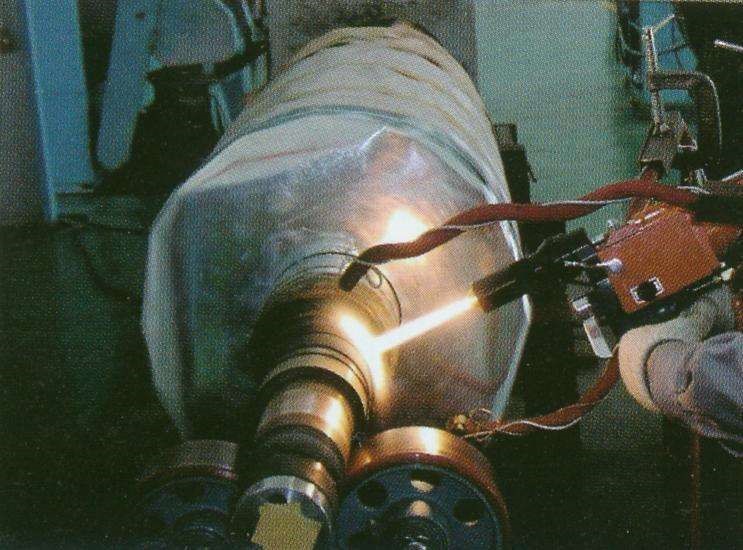
Non-metallic materials also play a special role in marine anti-corrosion projects. Thermal spray experts mixed low density polyethylene (LDPE) with different concentrations of maleic acid (MAc), and then coloured and processed to make polyethylene coating. The experimental results showed that the bonding strength of the treated LDPE was significantly higher than that of the untreated LDPE. And the corrosion resistance of 30% red iron oxide-containing polyethylene coating is obviously better than that of 20% or 40% coating. Tambe SP Studied the corrosion resistance of mixtures of ethylene vinyl acetate (EVA) and vinyl alcohol (EVAl) with polyethylene, the result shows that EVA / PE is superior to EVAl / PE.
Propellers are the key propulsion devices for ships, submarines, etc. The materials are generally ZQAl12-8-3-2, ZHMn55-3-1, etc. which are severely damaged by cavitation. By using low pressure plasma spraying spray nickel titanium alloy used as the anti-cavitation propeller coating. The service life is 4 times higher than aluminum bronze. The United States Navy has widely adopted the thermal spraying technology, which has greatly improved the performance and life of the corresponding system.


