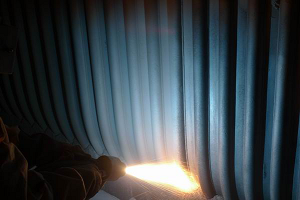
Electric water wall boiler for thermal spraying
Corrosion of water wall mainly comes from two aspects: In the turbulent state, the water or steam in the tube promotes the dissolution of the surface oxide protective layer of carbon steel and low alloy steel due to the interaction of high-speed fluid, temperature and chemical environment, resulting in corrosion damage; The radiation and convection of the high-temperature flue gas outside the pipe causes the pipe wall heating up, and the fly ash and the burning pulverized coal particles impact the pipe wall, and the corrosive gas in the flue gas corrodes the pipe wall together with the salt and the like deposited on the pipe wall. The mechanism of high temperature oxidation (corrosion) and wear of water wall tubes are complicated, which is related to furnace flame temperature, coal sulphur content, coal combustion impurity content, boiler combustion control, water wall installation quality and other factors.
Repairing corrosion problems of water wall boiler by supersonic arc has three advantages as below:
1.It is beneficial for the combination of particles and matrix, particles and particles, thereby improving the bonding strength and cohesive strength of the coating; the particle velocity is high, and the flight time in the air before deposition is short, so the oxide generated in flight is less, which is beneficial for the combination of particles, thereby increasing the cohesive strength of the coating and reducing the porosity of the coating. The higher the particle velocity is, the better the quality of the coating will be. When using arc spraying, the temperature of the arc zone is up to 5000-6000 ° C, and arc spraying is directly converted electric energy into heat energy to melt the wire, and the heat energy utilization rate is up to 70-80%.
2.The coating has high bonding strength. The bonding strength of supersonic arc spray coating can reach up to 60 MPa, which is close to the quality of the plasma.
3.The coating porosity is low. The porosity of coating surface is generally less than 1%, which improves the wear and corrosion resistance of the coating.