


Applications of Thermal Spray Ceramic Coatings in Industry
Thermal spraying ceramic coating has been successfully used in various industries. Here is a brief introduction to some applications in aerospace, aviation, and certain basic industries.
1, Applications in Aerospace Industry
The components in the aerospace industry are more demanding than the land-based components. It requests the stable and reliable performance, light weight materials and high-performance ceramic coatings used in the thrust chamber of the liquid rocket engine. The tail nozzle of the solid rocket engine effectively solves the problem of heat insulation and high temperature erosion within a short time. It has been successfully applied to certain components of satellites and spacecraft as thermal barrier coatings and temperature control coatings. The ceramic coating is also used to solve the heat insulation and erosion resistance problems of gas valve core assembly, tail wing and the skin of the missile attitude control.
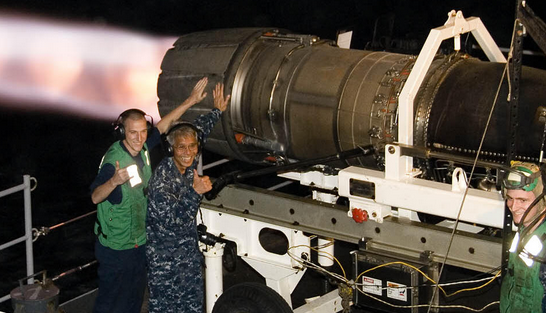
Figure (1) is a solid rocket engine nozzle formed by thermal spray technology.
2, Applications in aviation industry
In order to improve the service life of aircraft engines, the HP JD8 engine was manufactured by Hewlett-Packard Company in the 1970s , using 48 kinds of coating materials on more than 2,800 parts, which effectively extended the overhaul period of the engine (extended from 4000h to over 16000h). Thermal barrier coating is one of the key technologies of modern aeroengines. Aeroengine hot end components like flame tube, afterburner, turbine blades usually use plasma spray to Al2O3, ZrO2 or multilayered cermet composite coatings.
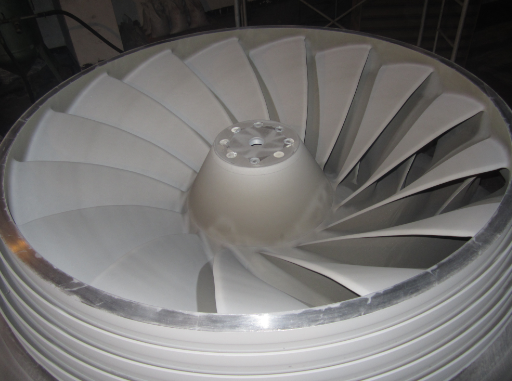
Figure (2) is a photo of a turbine blade sprayed with ZrO2 coating
3, Applications in basic industry
3.1 Applications in power industry
The WC/Co cermet coating is applied to the blades of the blower and the induced draft fan of the pulverized coal boiler in the thermal power station to reduce the wear of the fan blades in the high-speed dust environment. The service life of the coated blade is improved by more than 4 times.
The piston rod in the hydraulic hoist of large water control project must bear the wear and tear of heavy load and reciprocating sliding when opening and closing the gate, and also bear the corrosion of moisture and water vapor. The traditional chromium plated piston rod will leak or even stuck after a period of time, which directly affects the opening and closing of the gate and the positioning. Relevant data reported: Ceramic coating piston rod developed by German HUNGER company has effectively solved the problems above. The diameter of the piston rod is one-meter-long , and the single piece weighs 15 tons. It is a typical substitute for the traditional chromium plating.
3.2 Applications in petrochemicals.
Reciprocating pumps are widely used in the petrochemical industry, taking advantage of the reciprocating movement of the plunger to transport the liquid medium. There are many examples of plasma sprayed ceramic coated plungers. Cr2O3, Al2O3 or Al2O3TiO2 ceramic coatings are usually used for things like mud pump plunger in oil exploration, chemical fiber production of C-type pump and titanium dioxide pump plunger.
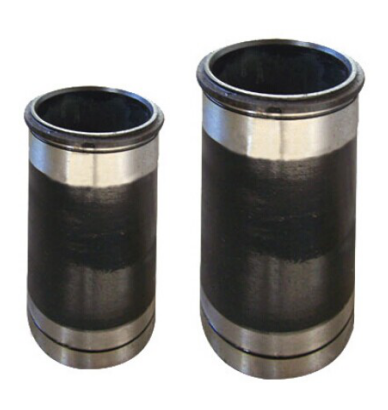
Figure (3) is a photo of ceramic coated plunger
In order to prevent the leakage of the liquid medium being transported, the mechanical dynamic seal ring and the sleeve are coated with ceramic-coated parts, which have been widely used in the production of petroleum, chemical fiber, and chemical fertilizers in the face seal. The ball valve is one of the key components for transporting high temperature and containing solid particles and corrosive slurry. Sealing requirements are quite stringent. Using plasma to spray Cr2O3 or HVOF to WC/CO effectively solves this problem and increases the service life by approximately 10 times.
3.3 Applications in the metallurgical industry
Roller for steel continuous annealing furnace uses plasma spray on Al203+25%
Zr02 composite coatings, and the service life of the original high temperature alloy and graphite roller has increased 6 ~ 8 times.
The sunken roll for hot-dip galvanizing uses HVOF to spray cermet coatings, which has excellent resistance to corrosion by molten zinc and good wear resistance. This new type of sunken roll has a lifespan of one month, which has increased by more than 2 times compared to the original sunken roll.
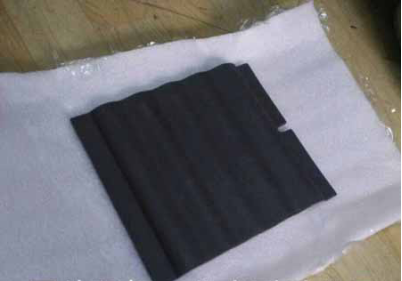
Figure (4) Energy-saving ceramic coating that saves more than 50%.
The sunken roll for hot-dip aluminizing was once the key technology for hot-dip aluminizing. It was coated with plasma-coated spinel and sealed with water glass, and the service life was significantly improved for more than 15 days.
3.4 Applications in Automotive and Internal Combustion Engines
In order to reduce vehicle fuel consumption and improve engine efficiency, plasma spraying ZrO2 thermal barrier coatings on the cylinders, cylinder heads (bottoms), and tops of pistons of automobiles and internal combustion engines have been gradually developed toward practical use.
In order to control the automobile exhaust gas pollution to the environment, oxygen sensors have been widely used in foreign countries, in which the ceramic probe is made of plasma-sprayed spinel coating or ZrO2 coating materials.
3.5 Applications in the textile industry
In order to overcome the abrasion of yarns and chemical fibers on textile parts, a large number of parts in the textile industry have used ceramic coatings such as rollers, feeder wheels, grooved rollers and friction plates where plasma spraying A12O3TiO2 or Cr2O3 is usually used.
3.6 Applications in Printing and Packaging Industry
In the printing industry, the ink fountain roller and the offset roller adopt the plasma spraying Cr2O3 ceramic coating, the cast iron printing roller adopts the A1O3 TiO2 coating, and the corona roller used for the printing of polyethylene and other plastic films adopts the plasma spraying A12O3 coating as the insulation coatings. The corrugating rollers in the packaging industry use plasma spraying Cr2O3 ceramic coatings.
4 Conclusion
Ceramic coating is a new type of composite material with much room for development. Developed countries have already formed a "ceramic coating industry". There are still some technology problems to be solved for greater development of ceramic coating technology, such as coating design and coating bonding strength, especially reducing the coating costs, etc. Taking thermal spraying as an example, most domestic enterprises are relatively small in scale and subject to the constraints of equipment, so the development speed is slow. Due to incomplete detection methods, the product quality stability needs to be further improved. With the introduction of advanced thermal spray equipment and the application of nanometer ceramic coating materials, especially the demand for high performance mechanical parts to spacecraft, aerospace and basic industries, they provide a broad market for the research and production of ceramic coatings. It can be predicted that in the manufacturing technology of mechanical parts in the future, the application field of antimony performance ceramic coatings will become more and more extensive.


